
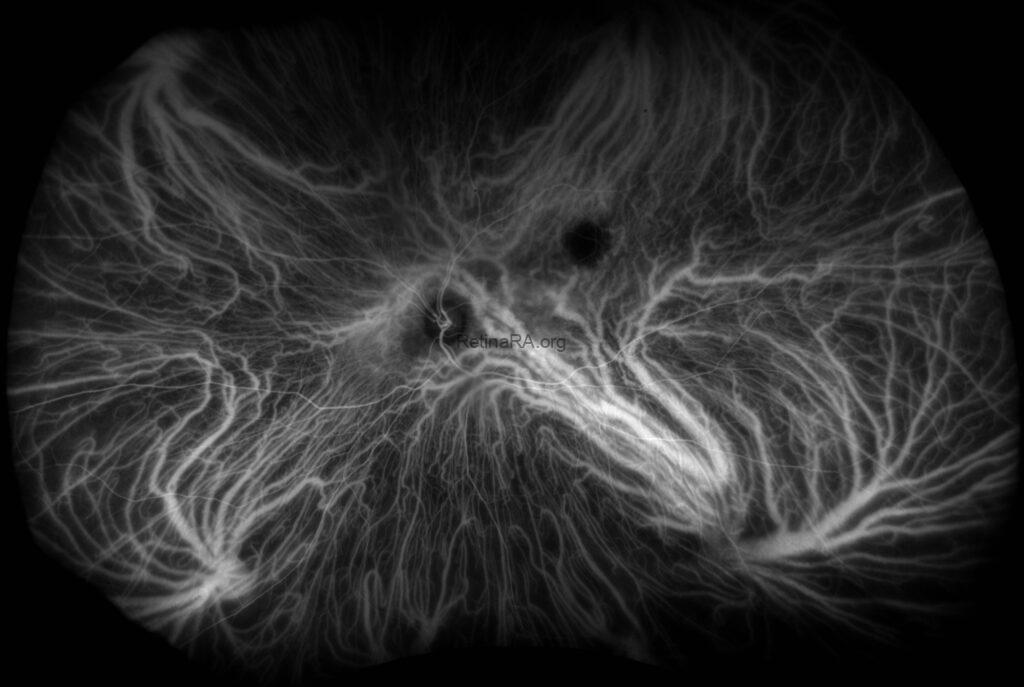
Central serous chorioretinopathy and the pachychoroid spectrum have become increasingly well-defined and widely recognized entities in retinal literature over the past decade. The pachychoroid spectrum was first introduced by Bailey Freund with the concept of pachychoroid pigment epitheliopathy and has since expanded to include pachychoroid neovasculopathy, polypoidal choroidal vasculopathy, focal choroidal excavation, peripapillary pachychoroid syndrome, and pachyvitelliform maculopathy. These disorders share common choroidal characteristics, including increased choroidal thickness, pachyvessels, inner choroidal thinning, and choroidal hyperpermeability. In particular, the presence of pachyvessels and the associated attenuation of the choriocapillaris are now considered more important pachychoroid markers than choroidal thickness alone.
The first part of the presentation focused on the nomenclature of pachychoroid spectrum diseases and the relationship between these entities. Pachychoroid pigment epitheliopathy was emphasized as a limited form of central serous chorioretinopathy rather than a sequela of the disease. The ongoing controversy regarding the definition of pachychoroid neovasculopathy, especially the distinction between primary pachychoroid neovasculopathy and type 1 macular neovascularization secondary to chronic central serous chorioretinopathy, was also discussed. In addition, polypoidal choroidal vasculopathy was highlighted as an important example of the terminological challenges within retinal diseases, since the term “polyp” does not accurately reflect the vascular nature of the lesion.
Newer entities such as focal choroidal excavation and peripapillary pachychoroid syndrome were also reviewed in detail. It was emphasized that some findings associated with pachychoroid disease are not entirely specific to the pachychoroid phenotype itself. Peripapillary pachychoroid syndrome, in particular, was discussed as a nasal variant of central serous chorioretinopathy, in which fluid originating from nasal choroidal hyperpermeability can directly enter the retina through areas of peripapillary atrophy, leading to intraretinal fluid accumulation.
Finally, the presentation addressed the limitations of the current term “central serous chorioretinopathy.” It was emphasized that the disease process is not confined to the central macula, but instead involves the entire choroidal tissue between the vortex veins, with fluid often extending beyond the macula into the peripheral retina. Based on these observations, a new terminology — “Pachychoroid Serous Retinopathy” — was proposed to better reflect the primary choroidal origin of the disease. This proposed nomenclature aims to increase awareness of the underlying pachychoroid-driven pathophysiology and has already been introduced in the literature.
The classification, imaging characteristics, and treatment approaches of central serous chorioretinopathy will be discussed in the following parts of this lecture series.
Credit: M. Giray Ersoz, MD, FEBO, Retina Specialist
Memorial Bahçelievler Hospital, Department of Ophthalmology, Istanbul, Turkey
Arel University School of Medicine, Department of Ophthalmology, Istanbul, Turkey
Instagram accounts: @retina.review and @retina.dr.girayersoz
Website: www.girayersoz.com.tr
