
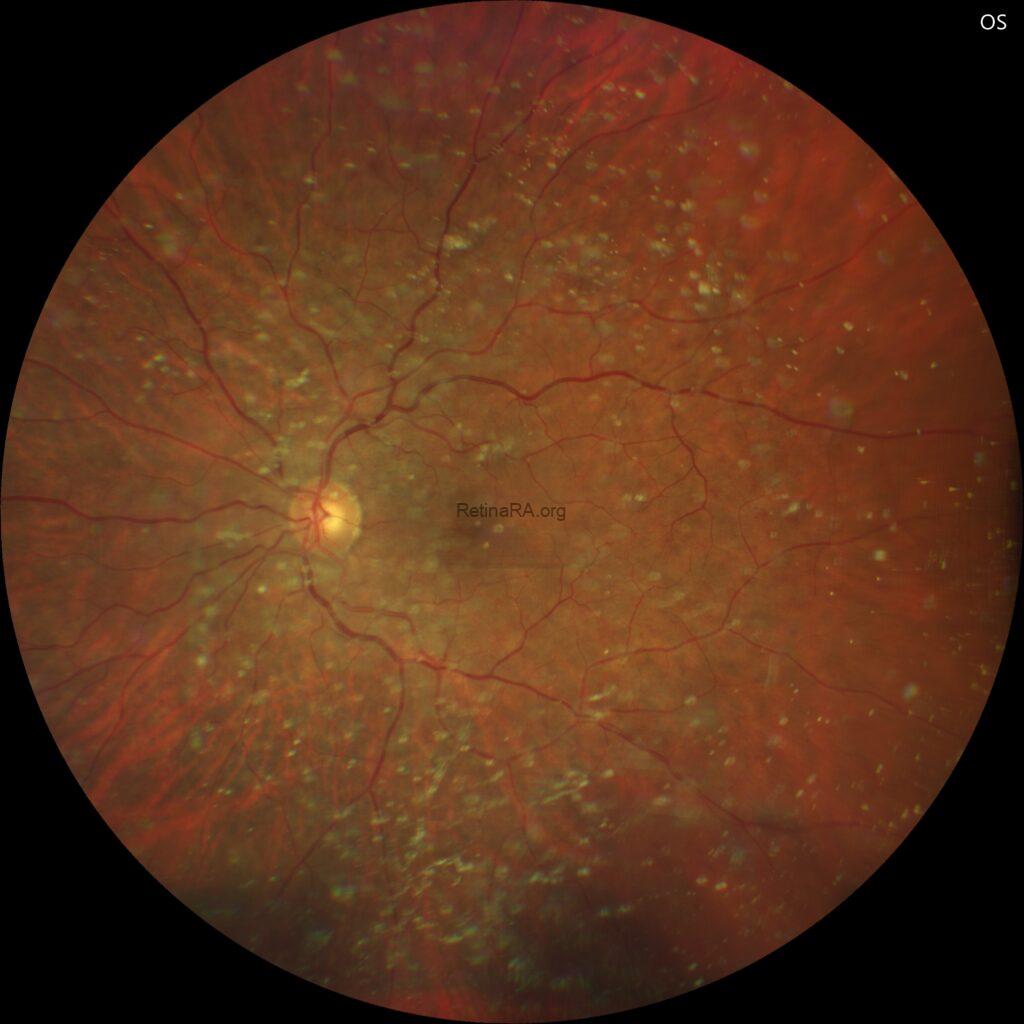
A 58-year-old male presented to the outpatient clinic for a routine eye examination. Best-corrected visual acuities were 20/32 in both eyes. Intraocular pressures were within normal limits. Anterior segment examination revealed bilateral nuclear sclerosis.
Fundus examination of the right eye was unremarkable. However, the left eye showed numerous diffuse yellow-white, spherical opacities of varying size and density within the vitreous cavity. These opacities exhibited movement with vitreous displacement during eye motion but did not gravitate inferiorly at rest. No signs of posterior segment inflammation, retinal vascular abnormalities, exudates, or hemorrhages were observed.


Asteroid hyalosis is an age-related, benign degenerative condition characterized by numerous spherical, yellow-white opacities suspended within the vitreous cavity. These opacities consist primarily of calcium and phospholipid deposits and are often found incidentally during routine fundus examinations. The condition is usually unilateral and does not typically affect visual acuity or require treatment. The particles are mobile with eye movements but do not settle with gravity, distinguishing them from other vitreous opacities like synchysis scintillans. Importantly, there are no signs of intraocular inflammation, hemorrhage, or vascular abnormalities. Asteroid hyalosis should be differentiated from pathologies such as intermediate uveitis or vitreous hemorrhage, especially in symptomatic patients.
